


Fourier Transform Infrared (FTIR) Spectroscopy is a widely used analytical method for recognizing chemical compounds and describing materials from their infrared absorption patterns. One of the more critical factors that really shapes FTIR results is how the sample is prepared, yeah. Depending on the sample type, you usually need a specific approach for preparation so you can get a good response with infrared light, reduce unwanted effects, and end up with spectra that are clearer and also repeatable. This article focuses on the common sample types and various methods used in FTIR analysis, together with the best practices for sample preparation invoved in FTIR analysis.
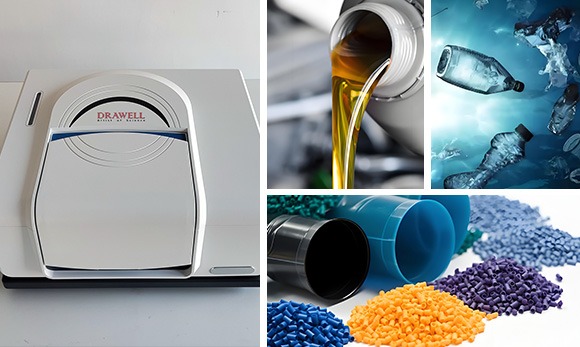
Sample Types and Considerations for FTIR Analysis
This chart provides the different sample types and what needs to be considered for FTIR analysis.
| Sample Type | Description | Typical Form | Key Considerations |
| Solid | Most common FTIR samples; may require grinding or embedding | Powders, fibers, films, bulk materials | Particle size uniformity, moisture content, need for transparent matrix (e.g., KBr) |
| Liquid | Analyzed directly or as solutions | Neat liquids or solutions | Use of IR-transparent cells, solvent interference, sample thickness |
| Gas | Used for environmental or reaction studies | Gaseous compounds in specialized cells | Most common FTIR samples may require grinding or embedding |

Common Sample Preparation Methods for FTIR Analysis
Different sample types need tailored preparation methods so the sample interacts well with infrared light, reducing unwanted interference, and gives spectra that are clear and reproducible.
KBr Pellet Method
The potassium bromide , KBr , pellet method is one of the more traditional and often used techniques for solid material. You take finely ground sample and mix it with dry KBr , since KBr is transparent in the infrared region , then you press the mixture into thin pellets that are transparent. With this route you can get high-quality spectra with reduced light scattering, it is especially handy when you only have a small amount of solid. Still, you need to watch hygroscopic samples, because they can take up water from air and that messes with the recorded bands. Also, the grinding step should be gentle , so sensitive compounds are not changed during the process.
Attenuated Total Reflectance (ATR)
Attenuated Total Reflectance , you know, ATR , has been getting more and more popular because it is pretty straight forward and needs less sample handling than many other approaches. In this method, the sample, solid liquid or gel , is put right onto an ATR crystal. The infrared beam bounces inside the crystal and during the reflections it interacts with the very near-surface region of the sample. Because of that, ATR is considered non destructive and it can rapidly take on a wide variety of sample categories. Still the main drawback of ATR is that it mostly reports what happens at the surface region, so in heterogeneous materials that surface layer might not mirror the bulk properties.
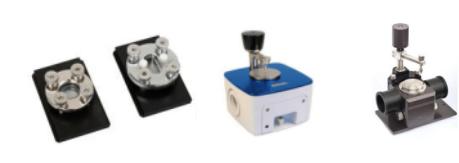
Mull Technique
The mull technique is another method that people use for solid specimens, mostly when they are sticky, or really fussy to deal with when they’re still in powder form. Here the thing is the sample is ground up with a non absorbing mineral oil, like Nujol, to make a “mull”. After that, the mull gets set between two IR transparent windows, and then it is measured. It works well for smaller or stubborn solids, but you have to keep in mind the absorption signals that the mineral oil itself adds.
Thin Film and Microtome Sectioning
For polymers, biological materials, and other soft solids , preparing thin films or actual sections is often the best way forward. Thin films can be made by casting, pressing, or letting the solvent evaporate. If the material is delicate, a microtome can be used to slice it into sections with pretty uniform thickness. With this approach, you can measure directly , without needing extra additives or a separate matrix. The main headache is managing the thin pieces without bending or warping them, and also keeping the thickness consistent over the whole sample.
Solution Method
When dealing with soluble solids or liquid samples, dissolving the material in an IR transparent solvent is a common approach. Then the solution is positioned into a liquid cell, using a suitable path length for the FTIR measurement. This method is especially useful for quantitative analysis, and for studies where a uniform dispersion of the analyte is necessary. Analysts need to carefully pick solvents that do not interfere with the spectral areas of interest, because some solvents may show overlapping absorption bands and you can miss the real signal.
Gas Cell Method
Even though it is less common than working with solids or liquids, gas-phase samples can still be looked at with FTIR, especially in environmental watch or reaction studies, there can be a big value here. Typically the gases are gathered in specialized long path gas cells so that infrared light can keep interacting with the sample for longer. With this approach you can catch low concentration gases, yet you need careful management of both concentration and path length to prevent absorption bands from becoming saturated, or ending up with feeble signals.

Best Practices in Sample Preparation for FTIR Analysis
This chart provides a quick reference in the lab and ensures that all critical factors are considered before performing FTIR analysis.
| Best Practice | Description | Impact |
| Understand the Sample Type | Identify whether the sample is solid, liquid, or gas. | Choosing the correct preparation method ensures optimal infrared interaction and spectral quality. |
| Avoid Contamination | Use clean tools, gloves, and IR-transparent materials; prevent cross-contamination. | Contaminants can introduce unwanted absorption bands, affecting accuracy. |
| Control Moisture | Dry hygroscopic samples and, if necessary, perform analysis under controlled humidity. | Water can interfere with IR spectra, especially in the OH region. |
| Ensure Sample Uniformity | Grind solids to a fine, consistent particle size; ensure thin films are even. | Prevents scattering effects and ensures reproducible spectra. |
| Optimize Sample Thickness | Adjust thickness according to the method (pellets, films, or liquid cells). | Too thick samples may saturate absorption bands; too thin may produce weak signals. |
| Select the Appropriate Preparation Method | Choose from KBr pellets, ATR, mull, thin films, solutions, or gas cells. | Different methods suit different sample types and analysis goals. |
| Minimize Sample Alteration | Handle sensitive samples gently to avoid chemical or physical changes during preparation. | Preserves the true chemical structure for accurate analysis. |
| Consistent Handling | Maintain consistent procedures across samples. | Improves reproducibility and comparability of results. |
Final Words
Proper sample preparation is really crucial if you want dependable and reproducible FTIR spectra. If you take a moment to understand what kind of sample you have, and then pick the preparation approach that fits best, say KBr pellets, ATR, mull, thin films, solutions, or even gas cells, you can reduce those irritating errors, improve the spectral appearance, and still get faithful material characterization. Whether for solids, liquids, or gases, small sample preparation details really do matter, ensuring FTIR remains a strong and practical technique for chemical analysis across many industries.
Get Quote Here!
Latest Posts

What Next?
For more information, or to arrange an equipment demonstration, please visit our dedicated Product Homepage or contact one of our Product Managers.


